Showing posts with label Wood Wall Art. Show all posts
Tuesday, July 14, 2020
Wednesday, November 20, 2019
Canvas Prints and Canvas Art
by TwoOldGuysDistributingCo
Nov 20, 2019

Summary:
Canvas is the most popular of all art media. Fine art reproductions, contemporary art, abstract art, original paintings and digital photos can be turned into canvas prints. Printing on fine art materials such as canvas and watercolour papers is often referred to as Giclee. The French term Giclée means to spray or squirt, which is how an inkjet printer works. However, it is not the same as a standard desktop inkjet printer, and is much larger at over a meter wide.
Keywords:
canvasprints, canvas art, giclee prints
Article Body:
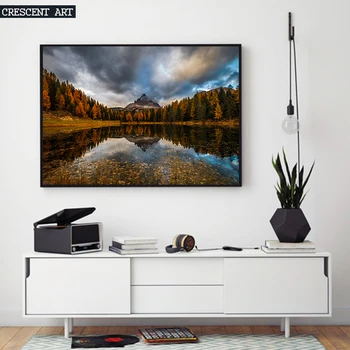
Canvas prints are fast becoming a contemporary way of decorating living rooms, and sitting places all over UK and Europe. A canvas print is essentially a print reproduction of a photo or artwork on canvas. The patterns and designs used are what define and make canvas prints special. Cheaper than commissioning a painting, yet as elegant and eye catching as any normal canvas painting, canvas prints are fast become a quick and effective way of making a statement, the best part is that canvas prints are available in a vast array of printed medium. From digitally printed canvas prints to the traditional yet impressive, off set printing based canvas prints, almost all major art works have been reproduced using canvas prints.
Before a canvas print reaches the beautiful and arty finish that you see, there are a few steps that are taken to ensure that the canvas you view is prim and perfect. Once the canvas and the method of printing is selected, the photograph is first analysed to gauge the feasibility of the print, although almost all photographs and images, can be converted into canvas prints, however all professional canvas printers make sure that they let the customer know if there are going to be colour and quality variations. You should be prepared for minor colour and quality variations if you are told so by the printer.
Once the canvas print is printed, the next step is trimming the canvas and preparing it to be mounted, or as the technical term used is ‘stretched’. Stretching is a specialized task and involves the mounting of the canvas on a wooden frame, and then setting it so that it emulates a canvas original and does not loose the charm and effect of a canvas painting. After the canvas is mounted and affixed to the wooden frame, the canvas is then finally made ready for delivery. Stretching is a specialized process, and is one of the major reasons, why people prefer leaving canvas prints to professionals. Stretching is usually included in the overall cost of buying a canvas print.
Based on the end result of the border the canvas is said to have ‘bled’ or not, if a canvas was allowed to print to keep the trimming and mounting process in mind, and the end result has no white margins then the canvas is said to have been printed with bleed, in the other case there is a particular area only that is printed, and the white canvas shows only at the margins. Make sure you are aware of both results, as some people actually like the canvas print without bleed as it makes the print look even more authentic (a regular painting does not usually have a painting on the margin).
The biggest advantage that canvas prints of today have is that, with the evolution of printing methods the results are absolutely breath taking, and are ideal for any contemporary home. These are some of the things you need to keep in mind before you actually go out and get yourself a canvas print for your home, or as a gift for someone special.
Friday, December 14, 2018
Satin ribbon
Bored? Look at These Hobby Ideas!
Bored? Look at These Hobby Ideas! Have you ever played one too many computer game or watched one too many old rerun? You just can't get into another mystery and you just feel flat? Maybe you are suffering from boredom, that familiar accomaniment to our automated, precooked lifestyles. If so, you need to check out these hobby ideas. Hobbies have been found to be therapeutic as they relieve stress and get the mind active. In this article, you'll find hobby ideas for every sort of person, from the intellectual to the athlete, from the homemaker to the attorney. Many times we are bored because we have become too inactive. If this is your problem, you might like a sports hobby. Have you ever tried tennis? How about golf? Many people simply love bowling until it becomes an important part of their lives. Sports hobbies get you out of the house and often are a way to make friends with others. Then again, some active hobbies can be enjoyed in our own homes, such as weight lifting and doing aerobic dance to a video. Speaking of aerobic dance, dancing is another great pastime. When you think of hobby ideas, don't forget the many forms of dance. Square dancing is fun for people who like getting together with groups, while ballet and modern dance appeal to the more contemplative souls. And while we're on contemplation, y
ou might enjoy doing yoga stretches as a hobby. Maybe we're feeling bored and listless because we've been cooped up in the house too long. If that's the problem, here are a few hobby ideas to get you out in the fresh air. Have you ever thought of taking up canoeing, hiking, or trapping? How about getting involved with an environmental group? In many states, you can form groups to clean riverbanks and monitor water quality, and the state will provide perks such as t-shirts, work gloves, and first-aid kits. Or maybe you'd like studying the flora and fauna of your region. It can be great fun to stroll through the woods and fields with a field guide, learning to identify each wildflower, insect, tree, and bird. There are almost as many hobby ideas as there are bored people in the world, because everyone puts their own spin on their favorite hobbies. Maybe you'd enjoy decorating your house with antiques, or learning to bake specialty breads from around the World. Maybe you'd like to take part in a little theatre production, or learn to play guitar. What about the fine arts of weaving tapestries or painting with oils? Candle making, soap making, and many other old-time crafts are being enjoyed again. Truly, with all these hobby ideas, there is no reason to stay bored for long!
http://art-and-craft-hobbies.com/
http://wall-art-gallery.com
group Art Studio of Lewis Baber , Post and Sell your ART.
https://www.etsy.com/shop/Magikaljourneys?ref=seller-platform-mcnavArt
Two Old Guys Folk Art Share this:
http://Gallery-Wall-Art.com http://wall-art-gallery.com facebook.com/groups/wallartgallerywallartgallery@groups.facebook.com Blog: of art and craft-hobbies Website Stores http://art-and-craft-hobbies.com/ http://art-and-craft-hobbies.com/shop/ group Art Studio of Lewis Baber , Post and Sell your ART. https://www.etsy.com/shop/Magikaljourneys?ref=seller-platform-mcnavArt Two Old Guys Folk Art Share this:http://Gallery-Wall-Art.com
Bored? Look at These Hobby Ideas! Have you ever played one too many computer game or watched one too many old rerun? You just can't get into another mystery and you just feel flat? Maybe you are suffering from boredom, that familiar accomaniment to our automated, precooked lifestyles. If so, you need to check out these hobby ideas. Hobbies have been found to be therapeutic as they relieve stress and get the mind active. In this article, you'll find hobby ideas for every sort of person, from the intellectual to the athlete, from the homemaker to the attorney. Many times we are bored because we have become too inactive. If this is your problem, you might like a sports hobby. Have you ever tried tennis? How about golf? Many people simply love bowling until it becomes an important part of their lives. Sports hobbies get you out of the house and often are a way to make friends with others. Then again, some active hobbies can be enjoyed in our own homes, such as weight lifting and doing aerobic dance to a video. Speaking of aerobic dance, dancing is another great pastime. When you think of hobby ideas, don't forget the many forms of dance. Square dancing is fun for people who like getting together with groups, while ballet and modern dance appeal to the more contemplative souls. And while we're on contemplation, y http://art-and-craft-hobbies.com/
http://wall-art-gallery.com
group Art Studio of Lewis Baber , Post and Sell your ART.
https://www.etsy.com/shop/Magikaljourneys?ref=seller-platform-mcnavArt
Two Old Guys Folk Art Share this:
http://Gallery-Wall-Art.com http://wall-art-gallery.com facebook.com/groups/wallartgallerywallartgallery@groups.facebook.com Blog: of art and craft-hobbies Website Stores http://art-and-craft-hobbies.com/ http://art-and-craft-hobbies.com/shop/ group Art Studio of Lewis Baber , Post and Sell your ART. https://www.etsy.com/shop/Magikaljourneys?ref=seller-platform-mcnavArt Two Old Guys Folk Art Share this:http://Gallery-Wall-Art.com
Monday, December 10, 2018
How To Start Your Own Gallery
So you are an art collector at the moment, with several pieces of art in your collection, and have noticed just how profitable the world of art can be for individuals looking to get into it in terms of business rather than as a hobby. It may seem like a romantic notion to have your own art gallery and be able to influence the world of art in a small way, but that is often not the reality. Starting any business of your own is extremely difficult, but starting an art gallery can be one of the most difficult of business tasks. You not only have to have a measure of artistic talent, as such, but you have to have a great deal of business sense. However, there are several tips that can help you on your way if that is really what you want to do. 1. Never open your own art gallery if it is only for the money - If you are in the gallery business for the money then look elsewhere because most galleries only make enough to cover the bills for the first few years. Until your business is established, you have next to no chance of making enough money to call your business a success. You should open the gallery because you love art and not to make a profit. If you do make a profit then that is a bonus. 2. If you have no knowledge of art collecting then do your homework beforehand - If you know nothing about art collecting then running an art gallery is not for you, but if you are determined then you need to learn all of the ins and outs of art collecting before you can own a gallery. This will take you at least six months if not longer so be prepared to be in it for the long haul. 3. Tap into your passion for art - A passion for art is a must and is necessary if you really want to attract both artists and sponsors alike. It is also necessary when trying to advertise any events that you have in your calendar. Beware of letting your love of art get in the way of your business head. 4. Know exactly what it is that you plan to do - You should have an aim, a goal, before setting up any business. If you want to own an art gallery then you should have a target for sales and a target for your involvement in the community too. 5. Find out where the best location would be before renting premises - Of course, if you are planning to set up business in a village with 250 working class inhabitants then it is to be expected that business will not be booming. However, if you have a good location in the centre of a town with little competition and middle class demographics then you will do far better. Check out rents and your audience before you actually put a deposit down on your potential gallery. 6. Have a business background - You must have business skills in order to make your art gallery work. Without business acumen, the likelihood is that you will be one of the businesses that do not see two years, and there are way too many of those around at the moment! 7. Brush up on your people skills - You need people skills to be able to attract artists, sponsors and press attention and should be able to make all of those feel comfortable in your gallery. Attracting customers is also a big part of any business so make sure that you are well prepared! Photo by Sharon McCutcheon on Pexels.com There is so much more to opening a gallery than meets the eye. You have all of the mundane tasks like hanging promotional materials, publicizing events, making sure that artists want to trust you to sell their work, courting the press and any number of other tasks that get tiresome and boring after the first few weeks. If you are prepared to do that and dedicate yourself to the pursuit of the fine arts for the rest of your life then it may be for you. You must certainly be prepared to work hard. Just make sure that you are getting into art gallery owning for the right reasons instead of the romantic image that you have in your head.
Website Stores http://art-and-craft-hobbies.com/ http://art-and-craft-hobbies.com/shop/ group Art Studio of Lewis Baber , Post and Sell your ART. https://www.etsy.com/shop/Magikaljourneys?ref=seller-platform-mcnavArt Two Old Guys Folk Art Share this: http://Gallery-Wall-Art.com
Sunday, December 9, 2018
Craft a Garden Scrapbook
group Art Studio of Lewis Baber , Post and Sell your ART. https://www.etsy.com/shop/Magikaljourneys?ref=seller-platform-mcnavArt How to Craft Chimes
[caption id="attachment_176" align="alignnone" width="613"]
Photo by Manesh Xavier on Pexels.com[/caption] How to Craft Chimes Did you know that you could take old reddish-brown clay made of unglazed ceramics to make chimes? (Terra Cotta Pots) The pots will make up a nice batch of chimes. To get started you will need up to ten ceramic pots. The diameter should be around 1 ¼ inch and up to 1 ¾ inches. You will need wood, 4 inches time’s six plates and varnish finish. You will need up to ten 5/8 inch grommet screws. Add up to ten rounds of beads made of wood and around 3/8 inches of spool, i.e. up to 30 pounds of anglers’ line. You will need wire up to 20 yardsticks, i.e. spools and a 7/8 inch grommet screw. How to make chimes: Now you are ready to make your chimes. On the wooden plates, add a coat of varnish, allow drying, and continuing a few times adding the varnish as needed. Use your grommet 5/8 screw, and screw it in by hand, screwing it into the plate. If you add, additional screws keep them an inch apart. Cut your line measuring lengthwise. Next, at each end feed the line through, and into the grommet screw. Work the line through until you reach the lower region of the vessel. Once you finish the step, run another line measuring lengthwise through your beads of wood, and fasten so that it forms a dual bond. You can use adhesives to fasten the area if you feel the need to do so. Take the other vessels you have available to create your chimes, threading them and regulate the measurement lengthwise as needed. You can now add the grommet 7/8 screws to hang your chimes. Fasten the screws at the middle of your crown plate. Use the wire outlined in this article to hang your chimes. You are now finished with your chimes. To complete this article I will give you a few tips on crafting snakes to place beneath the lower areas of your door so that you can keep wind out during the cold months. If you do not have a yard of fabric around your house, purchase a yard of strong textile weaves of fabric or corduroy. You will need thread that coordinates with your fabric. In addition, you will need stuffing, dry beans, and rice. Add some adhesives and felt, preferably red, white, and black. Next, gather your fabric and trim up to 10 inches wide, and around 6-inches lengthwise. Measure your door before cutting, since you will need length wider than the bottom area of your door. Use two parts of the outer regions of your fabric, gather and hand or machine sew at least 3 sides and around 3/8 inches away from the edge of your fabric. You will need to leave a short region of your fabric available. On the right side of your fabric conceal your seams and add your filling, i.e. stuffing. Turn up your edges and then stitch them and choose additives to design your snake. You can use glue, buttons, studs, etc to make your eyes if you choose to do so. As well, you can use your felt to make up the mouth, nose, and so on. Use the red felt to make the lips, tongue, etc, and the black to make up the surrounding features about the eyes, since as lids, or brows. The snakes will make up a great warming gift also. You can craft a few to give to your friends, as well as keep a few around your home to keep it warm in the winter months. [caption id="attachment_181" align="alignnone" width="647"]
Photo by Artem Bali on Pexels.com[/caption] Website Stores
http://art-and-craft-hobbies.com/
http://art-and-craft-hobbies.com/shop/
group Art Studio of Lewis Baber , Post and Sell your ART. https://www.etsy.com/shop/Magikaljourneys?ref=seller-platform-mcnavArt
Two Old Guys Folk Art Share this: http://Gallery-Wall-Art.com

Photo by Manesh Xavier on Pexels.com[/caption] How to Craft Chimes Did you know that you could take old reddish-brown clay made of unglazed ceramics to make chimes? (Terra Cotta Pots) The pots will make up a nice batch of chimes. To get started you will need up to ten ceramic pots. The diameter should be around 1 ¼ inch and up to 1 ¾ inches. You will need wood, 4 inches time’s six plates and varnish finish. You will need up to ten 5/8 inch grommet screws. Add up to ten rounds of beads made of wood and around 3/8 inches of spool, i.e. up to 30 pounds of anglers’ line. You will need wire up to 20 yardsticks, i.e. spools and a 7/8 inch grommet screw. How to make chimes: Now you are ready to make your chimes. On the wooden plates, add a coat of varnish, allow drying, and continuing a few times adding the varnish as needed. Use your grommet 5/8 screw, and screw it in by hand, screwing it into the plate. If you add, additional screws keep them an inch apart. Cut your line measuring lengthwise. Next, at each end feed the line through, and into the grommet screw. Work the line through until you reach the lower region of the vessel. Once you finish the step, run another line measuring lengthwise through your beads of wood, and fasten so that it forms a dual bond. You can use adhesives to fasten the area if you feel the need to do so. Take the other vessels you have available to create your chimes, threading them and regulate the measurement lengthwise as needed. You can now add the grommet 7/8 screws to hang your chimes. Fasten the screws at the middle of your crown plate. Use the wire outlined in this article to hang your chimes. You are now finished with your chimes. To complete this article I will give you a few tips on crafting snakes to place beneath the lower areas of your door so that you can keep wind out during the cold months. If you do not have a yard of fabric around your house, purchase a yard of strong textile weaves of fabric or corduroy. You will need thread that coordinates with your fabric. In addition, you will need stuffing, dry beans, and rice. Add some adhesives and felt, preferably red, white, and black. Next, gather your fabric and trim up to 10 inches wide, and around 6-inches lengthwise. Measure your door before cutting, since you will need length wider than the bottom area of your door. Use two parts of the outer regions of your fabric, gather and hand or machine sew at least 3 sides and around 3/8 inches away from the edge of your fabric. You will need to leave a short region of your fabric available. On the right side of your fabric conceal your seams and add your filling, i.e. stuffing. Turn up your edges and then stitch them and choose additives to design your snake. You can use glue, buttons, studs, etc to make your eyes if you choose to do so. As well, you can use your felt to make up the mouth, nose, and so on. Use the red felt to make the lips, tongue, etc, and the black to make up the surrounding features about the eyes, since as lids, or brows. The snakes will make up a great warming gift also. You can craft a few to give to your friends, as well as keep a few around your home to keep it warm in the winter months. [caption id="attachment_181" align="alignnone" width="647"]
Photo by Artem Bali on Pexels.com[/caption] Website Stores
group Art Studio of Lewis Baber , Post and Sell your ART. https://www.etsy.com/shop/Magikaljourneys?ref=seller-platform-mcnavArt Thursday, December 6, 2018
Buying Paintings: Cubism
Buying Paintings: Cubism What started out as a rather avant-garde art movement has become one of the greatest examples of artistic forms breaking that mold of convention, revolutionizing European painting and sculpture up to the present century, and was first developed between 1908 and 1912 during a collaboration between Georges Braque and Pablo Picasso with influences from the works of Paul Cezanne and Tribal art. Though the movement itself was not long-lived, it began an immense creative explosion that has had long lasting repercussions, and focused on the underlying concept that the essence of an object can only be captured by showing it from multiple points of view simultaneously. The movement had run its’ course by the end of World War I, and influenced similar ideal qualities in the Precisionism, Futurism, and Expressionistic movements. In the paintings representative of Cubist artworks, objects are broken up and reassembled in an abstracted form, and the artist depicts the subject in a multitude of viewpoints instead of one particular perspective. Surfaces seemingly intersecting at random angles to produce no real sense of depth, with background and object interpenetrating with one another, and creating the shallow space characteristic of Cubism. French art critic Louis Vauxcelles first used the term cubism, and it was after viewing a piece of artwork produced by Braque, the term was in wide use though the creators kept from using the term for quite some time. The Cubist movement expanded from France during this time, and became such a popular movement so quickly that critics began referring to a Cubist school of artists influenced by Braque and Picasso, many of those artists to Cubism into different directions while the originators went through several distinct phases before 1920. As Braque and Picasso worked to further to advance their concepts along, they went through a few distinct phases in Cubism, and which culminated in both Analytic and Synthetic Cubism. With Analytic Cubism, a style was created that incorporated densely patterned near-monochrome surfaces of incomplete directional lines and modeled forms that play against each other, the first phases of which came before the full artistic swing of Cubism. Some art historians have also pegged a smaller “Hermetic” phase within this Analytical state, and in which the work produced is characterized by being monochromatic and hard to decipher. In the case with Synthetic Cubism, which began in 1912 as the second primary phase to Cubism, these works are composed of distinct superimposed parts. These parts, painted or pasted on the canvas, were characterized by brighter colors. Unlike the points of Analytical Cubism, which fragmented objects into composing parts, Synthetic Cubism attempted to bring many different objects to create new forms. This phase of Cubism also contributed to creating the collage and papier colle, Picasso used collage complete a piece of work, and later influenced Braque to first incorporate papier colle into his work. Similar to collage in practice, but very much a different style, papier colle consists of pasting materials to a canvas with the pasted shapes representing objects themselves. Braque had previously used lettering, but the works of the two artists began to take this idea to new extremes at this point. Letters that had previously hinted at objects became objects as well, newspaper scraps began the exercise, but from wood prints to advertisements were all elements incorporated later as well. Using mixed media and other combinations of techniques to create new works, and Picasso began utilizing pointillism and dot patterns to suggest planes and space. By the end of the movement, with help from Picasso and Braque, Cubism had influenced more than just visual art. The Russian composer Igor Stravinsky was inspired by Cubism in some examples of his music that reassembled pieces of rhythm from ragtime music with the melodies from his own country’s influence. In literature, Cubism influenced poets and their poetry with elements parallel with Analytical and Synthetic Cubism, and this poetry frequently overlaps other movements such as Surrealism and Dadaism. 659 Website Stores
http://art-and-craft-hobbies.com/
http://art-and-craft-hobbies.com/shop/
group Art Studio of Lewis Baber , Post and Sell your ART. https://www.etsy.com/shop/Magikaljourneys?ref=seller-platform-mcnavArt
Two Old Guys Folk Art Share this: http://Gallery-Wall-Art.com Website Stores
Buying Paintings: Cubism What started out as a rather avant-garde art movement has become one of the greatest examples of artistic forms breaking that mold of convention, revolutionizing European painting and sculpture up to the present century, and was first developed between 1908 and 1912 during a collaboration between Georges Braque and Pablo Picasso with influences from the works of Paul Cezanne and Tribal art. Though the movement itself was not long-lived, it began an immense creative explosion that has had long lasting repercussions, and focused on the underlying concept that the essence of an object can only be captured by showing it from multiple points of view simultaneously. The movement had run its’ course by the end of World War I, and influenced similar ideal qualities in the Precisionism, Futurism, and Expressionistic movements. In the paintings representative of Cubist artworks, objects are broken up and reassembled in an abstracted form, and the artist depicts the subject in a multitude of viewpoints instead of one particular perspective. Surfaces seemingly intersecting at random angles to produce no real sense of depth, with background and object interpenetrating with one another, and creating the shallow space characteristic of Cubism. French art critic Louis Vauxcelles first used the term cubism, and it was after viewing a piece of artwork produced by Braque, the term was in wide use though the creators kept from using the term for quite some time. The Cubist movement expanded from France during this time, and became such a popular movement so quickly that critics began referring to a Cubist school of artists influenced by Braque and Picasso, many of those artists to Cubism into different directions while the originators went through several distinct phases before 1920. As Braque and Picasso worked to further to advance their concepts along, they went through a few distinct phases in Cubism, and which culminated in both Analytic and Synthetic Cubism. With Analytic Cubism, a style was created that incorporated densely patterned near-monochrome surfaces of incomplete directional lines and modeled forms that play against each other, the first phases of which came before the full artistic swing of Cubism. Some art historians have also pegged a smaller “Hermetic” phase within this Analytical state, and in which the work produced is characterized by being monochromatic and hard to decipher. In the case with Synthetic Cubism, which began in 1912 as the second primary phase to Cubism, these works are composed of distinct superimposed parts. These parts, painted or pasted on the canvas, were characterized by brighter colors. Unlike the points of Analytical Cubism, which fragmented objects into composing parts, Synthetic Cubism attempted to bring many different objects to create new forms. This phase of Cubism also contributed to creating the collage and papier colle, Picasso used collage complete a piece of work, and later influenced Braque to first incorporate papier colle into his work. Similar to collage in practice, but very much a different style, papier colle consists of pasting materials to a canvas with the pasted shapes representing objects themselves. Braque had previously used lettering, but the works of the two artists began to take this idea to new extremes at this point. Letters that had previously hinted at objects became objects as well, newspaper scraps began the exercise, but from wood prints to advertisements were all elements incorporated later as well. Using mixed media and other combinations of techniques to create new works, and Picasso began utilizing pointillism and dot patterns to suggest planes and space. By the end of the movement, with help from Picasso and Braque, Cubism had influenced more than just visual art. The Russian composer Igor Stravinsky was inspired by Cubism in some examples of his music that reassembled pieces of rhythm from ragtime music with the melodies from his own country’s influence. In literature, Cubism influenced poets and their poetry with elements parallel with Analytical and Synthetic Cubism, and this poetry frequently overlaps other movements such as Surrealism and Dadaism. 659 Website Stores
group Art Studio of Lewis Baber , Post and Sell your ART. https://www.etsy.com/shop/Magikaljourneys?ref=seller-platform-mcnavArt Wednesday, December 5, 2018
Painting, decorating
Painting, and Decorating
Painting, decorating and other ways to make sure your house is in a good condition to sell.
House selling has become a very competitive market, and though people are desperate in some areas to buy a house, its important you take care to ensure that the you've done all you can to make your house as attractive, safe and saleable as possible.
It is said that the average house buyer has no vision – which means you need to make their 'envisioning' themselves within the house as easy as possible.
Dark paintwork is a definite turn off – as are stained, worn or smelly carpets – both of which need to be taken care of.
On the latter, you could offer an 'allowance' or remove a fraction of the house costs for carpets – or, if you can, invest yourself and replace them, to allow a possibly higher sale price. Walls should be painted off white, or antique white – or possibly very pale and pastel shades if you're planning on redecorating – you may have no option if your walls are stained, marked or damaged.
Its also a good time to ensure that everything that you've been meaning to repair is taken care of is actually done – a faulty stair tread, banister or fence in the garden may only be a minor annoyance to you, but can be a danger to anyone looking at the house.
Its hard to sell your house without help, but one of the biggest tips you can take to ensure your house sells is to make sure you've removed your 'imprint'. Looking at the house impartially, remove anything that screams 'my personality' and 'my personal space'.
Things like photos, pieces of unique artwork, and ornaments and more can be removed before people come to view the house. Remember – they want to buy the house, not feel how you lived there, so if you haven't finished boxing up your non essentials by the time you start showing them the house, its time to consider whether you really need the clutter still unpacked – or whether its time to put it in the bin.
Website Stores
http://art-and-craft-hobbies.com/
http://art-and-craft-hobbies.com/shop/
group Art Studio of Lewis Baber , Post and Sell your ART.
https://www.etsy.com/shop/Magikaljourneys?ref=seller-platform-mcnavArt
Two Old Guys Folk Art
Share this: http://Gallery-Wall-Art.com
group Art Studio of Lewis Baber , Post and Sell your ART.
https://www.etsy.com/shop/Magikaljourneys?ref=seller-platform-mcnavArt
Buying Paintings: Expressionism
Marc, Franz
1880-1916.
"Reh im Wald II", 1912.
Oel auf Leinwand 110 x 81 cm.
Bernhard Koehler-Stiftung 1965,
Inv.Nr. G 13 321
Munich, Lenbachhaus.
Photo: akg-images[/caption]
Buying Paintings: Expressionism When speaking on buying paintings of the Expressionist movement, it is always a good idea to review what elements make Expressionism unique, and to gain an understanding of some of the artists representative of this particular artistic movement. The agreed upon intention of Expressionist artwork is not reproduce a subject accurately, but to instead portray the inner state of the artist, with a tendency to distort reality for an emotional effect. The movement is closely associated with its’ beginnings in Germany, and has a few different but overlapping schools of thought within. The term Expressionism was first used to describe the movement in the magazine produced in 1911 called “Der Sturm”, and was usually linked to paintings and graphic work that challenged academic traditions at the time. The philosopher Friedrich Nietzsche later helped to define the area of modern expressionism better by clarifying the movement’s links to ancient art before any more modern interpretation had, and applied his own unique philosophy to the movement. He has been quoted stating that disordered and ordered elements are present in all works of art, but that the basic traits of Expressionism lay in the mainly disordered aspects. The Expressionist point of view was usually conveyed through the use of bold colors, distorted forms, and a lack of perspective. Generally, a piece of expressionistic art is one that is expressive of intense emotion, and much of this kind of artwork occurs during times of social upheaval. Though it can be argued that an artist is expressive by nature, and that all artwork is truly expressionist, there are many who consider the movement particularly communicative of emotion. Later on, artists like Kandinsky changed 20th century Expressionist work through the formation of Abstract Expressionism. The art historian Antonín Matějček was elemental in coining the term as the opposite to the Impressionist movement as well, and though Expressionism seems well defined as an artistic movement, there have never been a group of artists that called themselves Expressionists. The movement was primarily German and Austrian, and many of the different groups of thought were based around Germany at the time. Another artistic movement that heavily influenced Expressionism was Fauvism. This kind of artwork is characterized by primitive, less naturalistic forms, and includes the works of famed painters Paul Gauguin and Henri Matisse. With this influence firmly in place, Expressionism grew into striking compositions that focused on representing emotional reactions through powerful use of color and dynamic approaches with subject matter, and seemed to counter the qualities centered on by the French Impressionism of the time. Where French Impressionism was to seek rendering the visual appearance of objects, Expressionism became an opposing movement seeking to capture emotions and subjective interpretation, and it was not important to reproduce a visually pleasing interpretation of the matter that the painting represented. Expressionism has crossed over into many differing fields of artistic vision, with sculpture and filmmaking being primary examples today, and have influenced many people throughout the course of its’ existence as a movement in art. These visions have combined over time to create the comprehensive idea of what Expressionism has become, and many people have found this type of art very appealing and eye-catching. Throughout this century, much Expressionistic artwork has come to be representative of what art can come to be, and many people have been influenced by this very emotional artwork.
Website Stores

group Art Studio of Lewis Baber , Post and Sell your ART. https://www.etsy.com/shop/Magikaljourneys?ref=seller-platform-mcnavArt
Friday, November 30, 2018
Learn to Draw and Paint
Everybody at some point in their life wanted to learn to draw and paint. Just by watching children, you could see that these skills are one of those that entice them during their early years. However, not all people decide to take this goal seriously, especially when adulthood comes around. Nevertheless, if you do want to develop this innate skill, it is still possible. Here are the basics that you have to know.
Drawing Versus Painting
One important factor that people do not understand is that drawing is different from painting. Thus, if you want to learn how to draw and paint, this means you have to develop two different skills. Drawing is generally defined as depicting a subject by the use of lines. On the other hand, painting is the art of coating surfaces with paint for artistic or utilitarian purposes.
Thus, the medium you’d be using would be the main difference along with the process itself. Nevertheless, these two disciplines are still related and most often combined to make an art work. Most of the time, drawing becomes a prerequisite of painting; although this is not always the case.
Drawing Basics
For you to start having drawing skills, you should constantly practice your hands and eyes. Do this by sketching. Constantly sketching is the best way for you to learn how to draw more artistically and professionally.
Remember that drawing is developed by constant practice of your hands. This is not improved by merely reading or acquiring whatever book based knowledge that is available. Thus, practice your hand to draw. Be very observant with your surroundings. Try to sketch things or people during your idle time. Doing this is really one worthwhile hobby that could pay off in the future.
Copying is your stepping stone in drawing. Get a model and copy it. It is all right to make mistakes. This is exactly what erasers are for any way. Also, do away with the notion that you need to have professional materials for your work to look good. A simple sketch book and basic drawing pencil and eraser would do.
Painting Basics
On the contrary, painting would entail appropriate materials so that your work would end up nicely done. You would need a couple of brushes that come in different sizes. You also need acrylic paint of various colors, but most importantly, you should have the primary colors, a bigger tube of white and black. However, if you do not want to buy a black tube, you could simply create your own. Do this by combining all the primary colors.
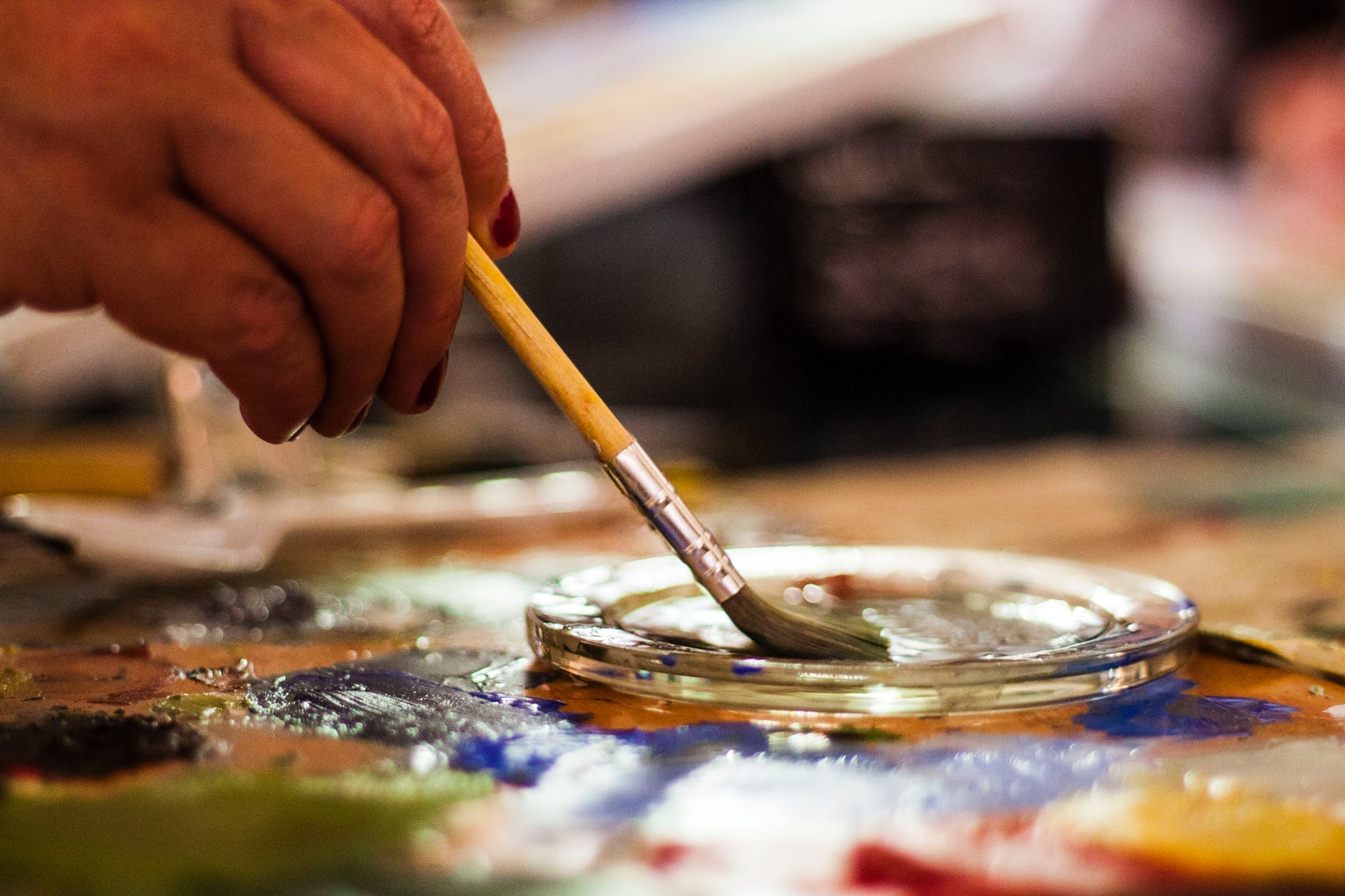
It is best to start with Acrylic paints because these are the easiest to work with. Thus, the general painting developmental stages would be mastering acrylics first before aiming to learn oils or water color. Also, this kind of paint is easily mixed with water. All you’ll need would be a glass or a bucket in which you would put the water in for cleaning purposes. You also use this water to keep your paint moist, it dries up quickly. A pallet is needed too. If you don’t have one, you can improvise by using paper plate that has Aluminum foil covering.
To start painting, you have to draw on your canvas first. Draw your subject and other details of the pictures’ environment. After this, add on the color using your paint. Keep on practicing by choosing different subjects. Also, try to experiment with the colors you’ve got.
[caption id="attachment_100" align="alignnone" width="549"]
Photo by Yigithan Bal on Pexels.com[/caption]Make full use of your pallet and create various shades of colors. Continue on sketching and painting like this and for sure your skill would start to develop in no time.
Blog: of art and craft-hobbies
Website Stores

http://art-and-craft-hobbies.com/

http://art-and-craft-hobbies.com/shop/
[caption id="attachment_91" align="alignnone" width="548"]
Photo by Pixabay on Pexels.com[/caption]group Art Studio of Lewis Baber , Post and Sell your ART.
https://www.etsy.com/shop/Magikaljourneys?ref=seller-platform-mcnavArt
Two Old Guys Folk Art
Share this:

http://Gallery-Wall-Art.com
Subscribe to:
Posts (Atom)